
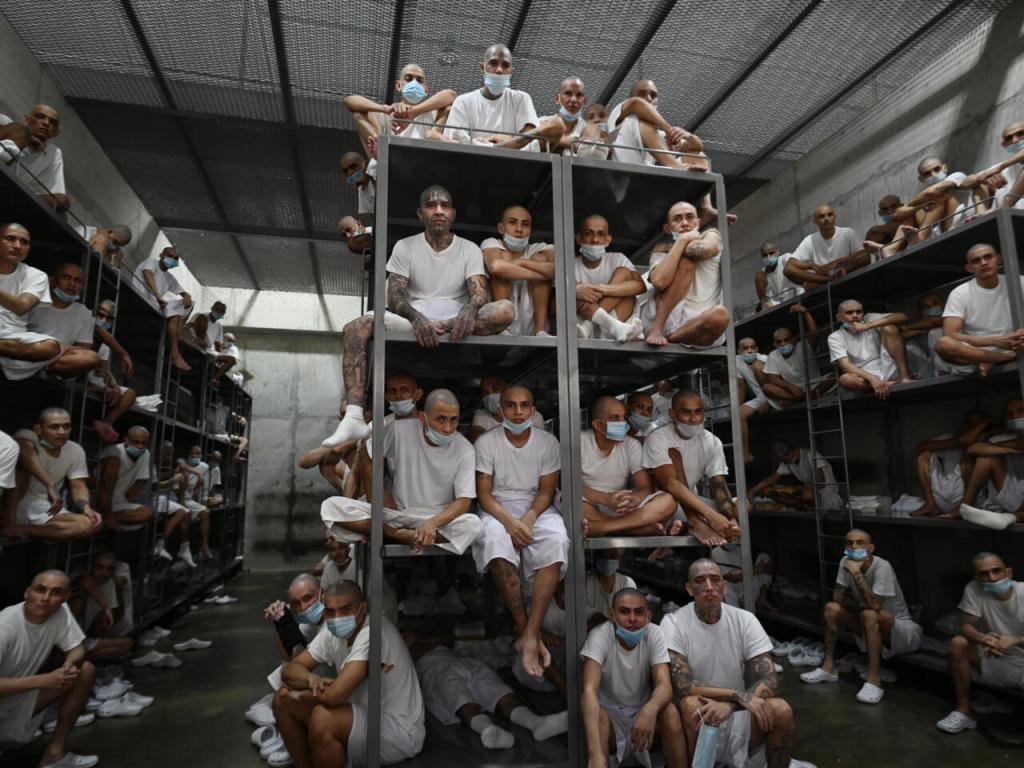
This week, Donald Trump suggested in a social media post that three Americans accused of vandalizing Tesla dealerships should be shipped off to a prison in El Salvador. Yes, that one. People are calling this the beginning of the end. The action that marks our descent into authoritarianism. But this is not the beginning.
It is the middle.
This is where we are: the current president—and possibly future nominee—openly threatening to disappear naturalized citizens into another country’s prison system for petty property crime. And the response, as always, is a deep and unbothered shrug from our elected officials.
I keep hearing that this will “pass like a kidney stone”—painful, but temporary. I don’t believe that. How many more times will we be told to wait it out and weather this storm? As if we’re not already soaked to the bone.
This will not pass. The world has been changed forever and there is no going back. Not to whatever imagined “normal” we ache for when the headlines get too loud. That America is gone the way the pre-9/11 world is gone—still visible in memory, perhaps, but no longer accessible by any road that exists today.
And yet the Democratic Party, ever lost in the fog of nostalgia and donor appeasement, continues to wander toward the center, convinced that there is a golden pocket of moderate voters waiting to be serenaded with polite policy and reasonable takes. These people simply do not exist.
You cannot reason your way out of fascism, and you certainly can’t beat it by becoming a watered-down version of the thing itself.
Fascism doesn’t pass. It doesn’t tire itself out. It doesn’t just go away if we keep our heads down. It gets worse. It calcifies. It becomes the new normal.
This is not a “left versus right” debacle. This is top versus bottom. And you are on the bottom, whether you like it or not.
Some people side with those at the top because they’ve bought into the lie that they might make it there someday. That if they work hard enough, keep their nose clean, and vote the right way, they’ll win the lottery of class mobility. But the truth is: you won’t. You won’t get a small loan of a million dollars. You won’t “grind” your way into the ruling class. The people at the top are there because they inherited stolen wealth, or they climbed on the backs of others to get there and then kicked the ladder away.
The lie is powerful, though. It’s easier to believe that your neighbor is your enemy than to face the fact that the system is rigged and always has been. They want us to compete with each other at the bottom. They want us to fight for scraps.
Everyone Wants a Revolution, But No One Wants to Do the Dishes
We must speak plainly about the liberal impulse to cut ties with anyone who does not share our precise vocabulary, our approved aesthetics, our curated values. The idea that a coworker who asks a clumsy question is not worth the effort of a reply. We call it accountability, but often it is simply abandonment dressed in moral clarity.
The weaponization of therapy language has become our downfall. Getting into an argument with a friend is not “abuse”. As much as you want to believe that you “don’t owe anyone anything,” you do. Sometimes it is the job of a friend to stay up late and be with you when you need help, even if there’s work in the morning. If you believe it takes a village, then you must be part of the village.
I need you to consider meeting people where they’re at. Community is not built on ideological perfection. It is built on shared labor. On tolerating the noise of upstairs neighbors and helping them change a tire anyway. On knowing someone voted the “wrong way” and still choosing to help carry their groceries. On recognizing that the systems we fight against want us isolated. Alone, we are marketable. Alone, we are powerless. Alone, we are easy to control.
This is by design. Capitalism rewards loneliness. If you don’t have a friend to lend you a dress, you’ll buy one. If you can’t ask your neighbor for help fixing a pipe, you’ll call a stranger with a clipboard. If you’re too proud or too scared to tell someone you’re struggling, you’ll suffer in silence—and then you’ll buy something to numb it. The system profits from your disconnection. Fascism thrives on it.
We need to start choosing the harder thing.
Be inconveniently kind. Be disruptively generous. Start the pot of coffee. Offer the spare room. Watch someone’s kid. Show up even when it’s awkward. Especially then.
This does not mean tolerating harm. If someone spits on you and calls you a slur, you do not owe them your peace. But most people are not frothing villains. Most people are simply unpracticed in care. They have never seen it modeled. They do not know what it looks like to belong to each other. Be the first trans person they’ve met. Be the first queer person they’ve loved. Be the first radical who smiled at their kid and helped them jumpstart their car.
The state cannot take what it cannot touch. They cannot criminalize connection. They cannot arrest mutual aid. They cannot privatize love. Not unless we let them.
We can’t wait this out. But we can build something better. Not in the halls of power, but in our neighborhoods. In our shared meals. In our arms wrapped around each other. In the deep and dangerous act of refusing to let them make us enemies.
If we choose to do the work. If we commit to the messy miracle of community. If we refuse to let them make us hate each other.
The future is not promised. But it is possible. Turn off the TV and dance together.


 If I Can't Dance Club
Leave a comment